Pages

After Unveiling Track List Britney Spears Reveals Duet With Sister Jamie Lynn


The singer tweeted out the official track list for her new album Britney Jean, and reveals that fans can expect a duet with her little sister Jamie Lynn Spears for a song titled "Chillin' With You," along with features from will.i.am and T.I.
"Sneaky hackers always trying to ruin my surprises. Here is the TRUE!!! My homie :)."
Britney Jean, Spears' eighth studio album, is set for release Dec. 3. Its first single "Work Bitch" dropped in mid-September and the singer recently released another track, "Perfume."
"'Perfume is incredibly special to me because it hits close to home, and I think the story is relatable to everyone," the pop princess exclusively told E! News of the ballad. "Everyone's been through an insecure moment in a relationship that's left them vulnerable and I think this song captures that."
Here is the complete track list for Britney Jean:
"Alien"
"Work Bitch "
"Perfume"
"It Should Be Easy (feat. Will.i.am)"
"Tik Tik Boom (feat. T.I.)"
"Body Ache"
"Til It's Gone"
"Passenger"
"Chillin' With You (feat. Jamie Lynn Spears)"
"Don't Cry"
(Deluxe Edition Tracks)
"Brightest Morning Star"
"Hold On Tight"
"Now That I Found You"
"Perfume (The Dreaming Mix)"
rose
rose
Tik Tik Boom (feat. T.I.)"
"Body Ache"
"Til It's Gone"
"Passenger"
"Chillin' With You (feat. Jamie Lynn Spears)"
"Don't Cry"
(Deluxe Edition Tracks)
"Brightest Morning Star"
"Hold On Tight"
"Now That I Found You"
"Perfume (The Dreaming Mix)"Tik Tik Boom (feat. T.I.)"
"Body Ache"
"Til It's Gone"
"Passenger"
"Chillin' With You (feat. Jamie Lynn Spears)"
"Don't Cry"
(Deluxe Edition Tracks)
"Brightest Morning Star"
"Hold On Tight"
"Now That I Found You"
"Perfume (The Dreaming Mix)"Tik Tik Boom (feat. T.I.)"
"Body Ache"
"Til It's Gone"
"Passenger"
"Chillin' With You (feat. Jamie Lynn Spears)"
"Don't Cry"
(Deluxe Edition Tracks)
"Brightest Morning Star"
"Hold On Tight"
"Now That I Found You"
"Perfume (The Dreaming Mix)"


Lady GaGa Criticizes Magazine Cover Photo


Lady GaGa talked about altered images on the cover of magazines as she received her trophy at Glamour's annual Women of the Year Awards at Carnegie Hall in New York. In her speech, the mother Monster said that she would use her voice to speak just like fellow honoree Malala Yousafzai, a teenager who was shot by Taliban as she fought for girls' right for education.


"I felt my skin looked too perfect. I felt my hair looked too soft. I do not look like this when I wake up in the morning... I don't even look like this," GaGa said at the Monday, November 11 event, referring to her look that night. As reported by Huffington Post, the "Applause" singer added that she was on mission to inspire young people to "fight back against the forces that make them feel like they're not beautiful."


The pop star even slammed her own photo for December issue of Glamour, urging the magazine to make changes for future editions. "It is fair to write about the change in your magazines. But what I want to see is the change on your covers... When the covers change, that's when culture changes," she said.

GaGa received the award for her anti-bullying campaign. In addition to Yousafzai and GaGa, other honorees included Barbra Streisand, who was honored with the Lifetime Achievement award, as well as models Christy Turlington Burns and Liya Kebede for their efforts to better maternal health care. In addition, Gabby Giffords and Mark Kelly received an award for their gun-safety campaign.

'Temple Run' Movie in the Works With 'Harry Potter' Producer on Board


Warner Bros. is close to obtaining the movie rights to Imangi Studios' game app "Temple Run". David Heyman is tapped to produce the upcoming film adaptation through his Heyday Films banner, while Lynn Harris will oversee the project for the studio. 

The game launched in 2011 becomes wildly popular on mobile devices. The film will follow an explorer who is chased by demonic forces after stealing an idol from a temple. No director and writer have been recruited to bring the adventure story to the big screen. 

Heyman has a history of producing box office hits for WB. He was one of the men behind the eight successful "Harry Potter" movies and recently helped the studio score big with Oscar contender "Gravity" which has raked in $475 million worldwide and counting.

Read more

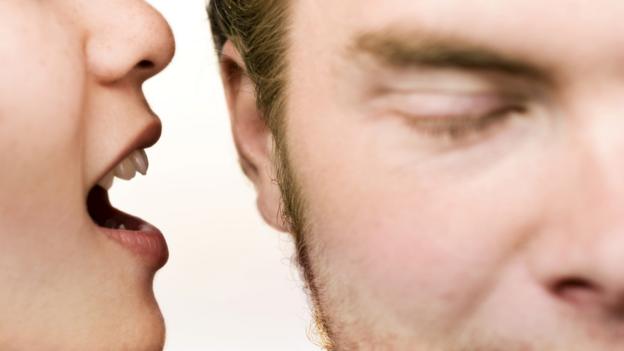
Do women talk more than men?


Women use an average of 20,000 words a day, compared to the mere 7,000 that men utter. At least that’s the assertion of a number of self-help and popular science books. Quoted by apparently authoritative experts and widely reported, it’s a statement that bolsters the stereotype of the fairer sex spending their days gossiping, while the stoic men folk get on with it, whatever it is, without the need to chatter. But is it actually true?
Talkativeness can be measured in various ways. You can get people into a lab, give them a topic to discuss and then record their conversations. Or you can try getting them to record their everyday conversations at home. You can count up the total number of words spoken, the time each person spends talking, the number of turns an individual gets in a conversation, or the average number of words spoken in a single turn.
By combining the results of 73 studies of children, US researchers found girls did speak more words than boys, but only by a negligible amount. Even this small difference was only apparent when they talked to a parent, and was not seen when they were chatting with their friends. Perhaps most significantly it was only seen until the age of two-and-a-half, meaning it might simply reflect the different speeds as which boys and girls develop language skills.
So not much difference among kids, but what about adults? When Campbell Leaper from the University of California, Santa Cruz, the psychologist who found the very small difference in young children, carried out a meta-analysis on the subject, it was men who talked the most. But once again the difference was small. It was also striking that lab-based studies in which pairs or groups were given specific topics to discuss found greater differences than those carried out in more real-life settings. This suggests that perhaps men were more comfortable in unusual, novel laboratory settings.
Leaper’s findings supported a review of 56 studies conducted by linguistics researcher Deborah James and social psychologist Janice Drakich published in a 1993 book on male and female conversational styles. Only two of the studies found women talked more than men, while 34 of them found men talked more than women, at least in some circumstances, although inconsistencies in the way the studies were done made them hard to compare.
But despite all the evidence to the contrary, we seem wedded to the idea that women talk more. In fact it’s just one of many areas of life in which we expect significant differences between the sexes, but when the research base as a whole is taken into account, men and women are often far more similar than popularly believed.

Credit: bbc.com

Image of Earth from Saturn orbit


Nasa has released photos of the Earth and Moon taken by a spacecraft orbiting Saturn - nearly a billion miles away.
Our planet and its only satellite appear only as dots in the picture, which was taken by the Cassini spacecraft on 19 July.
Scientists wanted to pay homage to the "Pale Blue Dot" image captured by the Voyager 1 probe in 1990.
This was the first time people knew in advance that their long distance picture was being taken.
These images were taken when the sun had moved behind the planet Saturn from the spacecraft's point of view, blocking out most of the light.

Bee Tidings

Like humans, bees avoid making difficult choices to minimize their losses, researchers have found.
"It's like taking a quiz game when you are given the option to pass and not take the penalty," says Dr Andrew Barron of Macquarie University, Sydney.
He and colleague Dr Clint Perry report their findings this week in the Proceedings of the National Academies of Science.
While humans can tell you how certain they are of the outcome of a choice, it's hard to probe whether animals are aware of uncertainty because they can't communicate with us directly.
Instead, researchers must set up experiments to see if animals selectively avoid making hard choices, and see if they reduce their returns when they are forced to make such choices.
Barron and Perry carried out such experiments in bees and found that these insects also cut their losses.
"Our evidence shows they are avoiding difficult choices," says Barron.

Learning a rule

In their experiments, the researchers trained bees to learn a rule.
The bees flew into a box that had two chambers - one with a target above a black reference bar, one with a target below the reference bar.
Each target had a small cup containing either a sweet nectar reward or the penalty of a bitter-tasting quinine solution.
The bees were only released from the chamber once they had chosen one or the other target.
The process was repeated with each individual bee 60 times, with the target varying in shape, size, colour and distance from the reference bar, until bees learnt the rule that choosing above the bar gave the reward whereas choosing below the bar gave a penalty.
When the target was very close to the reference bar, or overlapped with it, this would make the task of choosing without penalty more difficult for the bee.
In a separate experiment, bees were allowed to escape through an exit port in the chamber and opt out of making a choice.

Cutting losses

Barron and Perry found when the bees were forced to make a choice they performed worse when the task got hard (that is, they got the bitter penalty more often).
However, when the bees were given the choice of opting out, they did so more often when the task got harder, and their performance at these more difficult tasks improved.
"Their behavior suggested that they were using the opt out when they were most likely to get it wrong," says Barron.
Similar experiments have found that dogs, dolphins and rats all do this.
But, he says, whether animals are doing this because they were reflecting on the uncertainties involved in the choice, is difficult to know.
Barron says it's probably not surprising that bees have this ability, given the penalty for making wrong choices in their search for scarce nectar could be starvation.
He says the year-long field experiment was full of challenges.
"This was a hugely complicated behavioral experiment. It took about 12 hours of continuous working with each bee to get them right to the end of the test," says Barron.
"Trying to keep a bee interested when you are working out in the hot sun without a break all day is really hard."
Curiosity: http://www.abc.net.au/science/ 

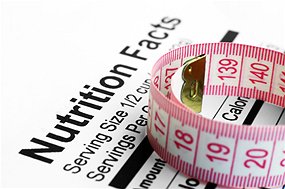
CALORIE STRATEGY

We people in the wealthier countries are getting fatter. In the USA, about two-thirds of the population are overweight, and about one-fifth are obese. This has been happening despite an enormous increase in weight-loss diets.
The latest research seems to show two main results.
First, the actual diet doesn't matter so long as you actually reduce your calorie intake and do more exercise. And second, while reducing calorie intake is an important part of achieving and maintaining a healthy weight, a calorie that you eat may not add up to a calorie available to your body.
A lot of diets tend to focus on the constituents of our food: fats, proteins and carbohydrates. It turns out that you can write a book demonizing any two of these constituents — say the carbohydrates and the fats — and then claiming that only the remaining constituent — say the protein — is worth eating. Or they may claim that carbohydrates and protein are evil, but you can eat all the fats you like. Courtesy: Dr Karl
For more and audio info, click here.